SALT LAKE CITY–Today marks the sixth year that Juneteenth has officially been recognized as a federal holiday, and the fifth year that it has been included in the list of state-observed holidays in Utah. However, the history of Juneteenth has much deeper roots—Black Americans have celebrated the day since the late-19th century. Now, more than ever, Westminster University is proud to celebrate Juneteenth. Our liberal arts foundation invites curious, rigorous inquiry across disciplines that challenge, connect, and equip us to explore questions from different points of view.
This Juneteenth, we asked Westminster University faculty: What questions does your discipline bring to how freedom is understood and lived?
“How is freedom inhabited, practiced, and danced into being through embodiment?”
–Meghan Wall, Associate Professor of Dance
“What does Juneteenth teach us about the correlation and importance of visibility and representation in graphic design and media as we visualize freedom?”
–Erin Coleman Serrano, Associate Professor of Communication and Chair, Graphic Design
“How do our attitudes toward language and writing emancipate some people and restrict others from fully expressing their identities?”
–Christopher LeCluyse, Professor of Literature, Media, and Writing and Writing Center Director
“When the spoken word carries truth and the written word carries power, what does it mean for freedom to require the latter to become real?”
–Tamara Stevenson, Vice President and Chief Diversity Officer, Associate Professor, Communication
“When we share our voice with the world and apply powerful tools like mathematics and statistics to help others become free, doesn’t the world answer back and teach us how to be even yet freer ourselves?
Bill Bynum, Associate Professor, Mathematics
“Juneteenth declared freedom, but not access to land, capital, and resources. What does doing business look like when the “free market” is neither free nor fair, and how should we question the standard story of entrepreneurship?”
–Charlie Warner, Assistant Professor of Practice, Master of Business Administration
“Enslaved people were legally prohibited from learning to read because literacy was understood as a direct path to freedom. What does Juneteenth ask us to remember about who controls knowledge in educational spaces, and why that control has never been accidental?”
–Marilee Coles-Ritchie, Faculty Fellow for the DUMKE Center for Civic Engagement and Professor of Education
History of Juneteenth
Short for “June Nineteenth”, Juneteenth marks the day when federal troops arrived in Galveston, Texas in 1865 to inform and ensure that enslaved Black people were finally freed following the end of the Civil War. The troops’ arrival occurred 2.5 years after President Abraham Lincoln signed the Emancipation Proclamation. Juneteenth honors the end of slavery in the United States.
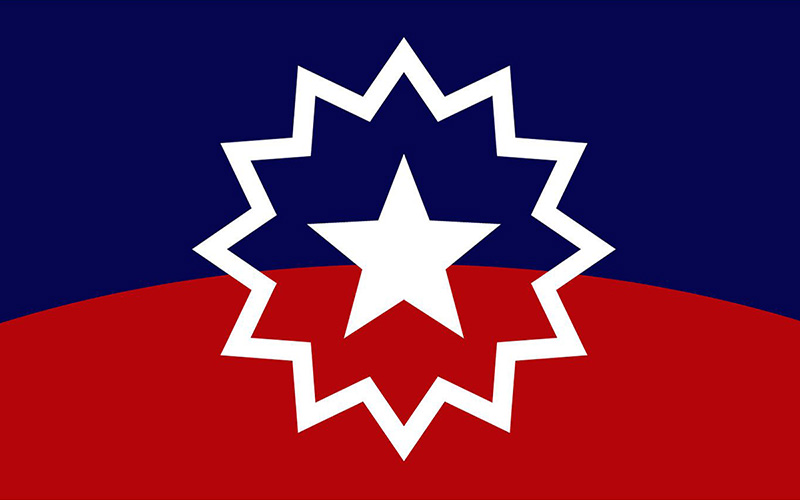
The Juneteenth flag was created in 1997 by activist Ben Haith. The flag uses the red, white, and blue colors from the American flag, representing the fact that all formerly enslaved Black Americans and their descendants are American. It also features a bursting star over a horizontal arc, symbolizing freedom and a new horizon for Black Americans in all 50 states.