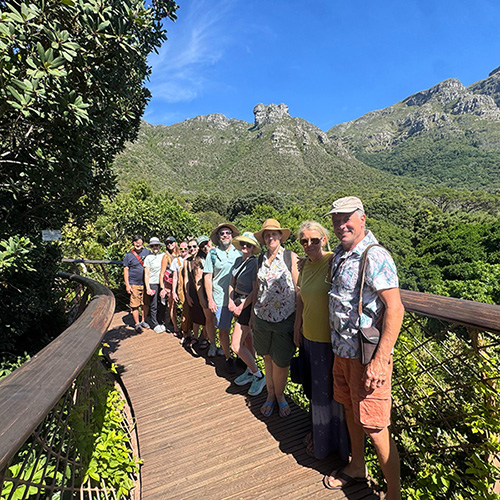
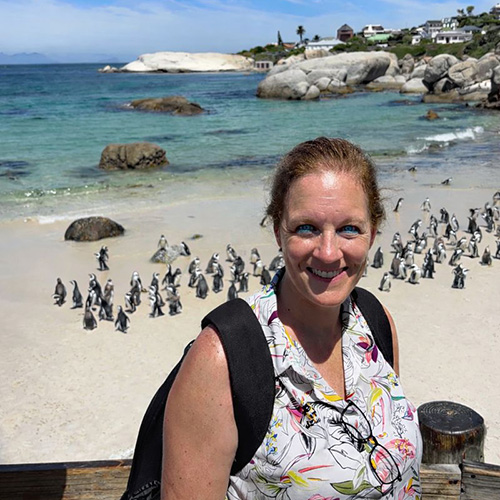
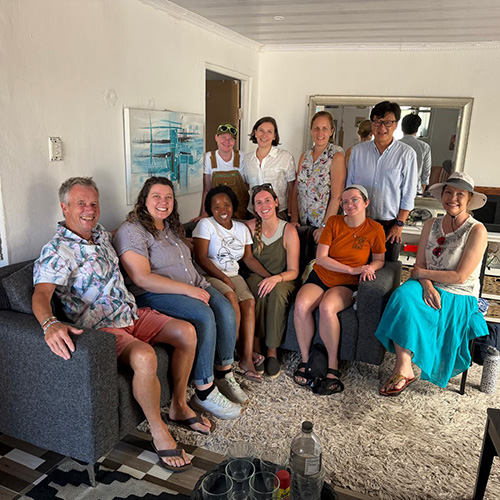
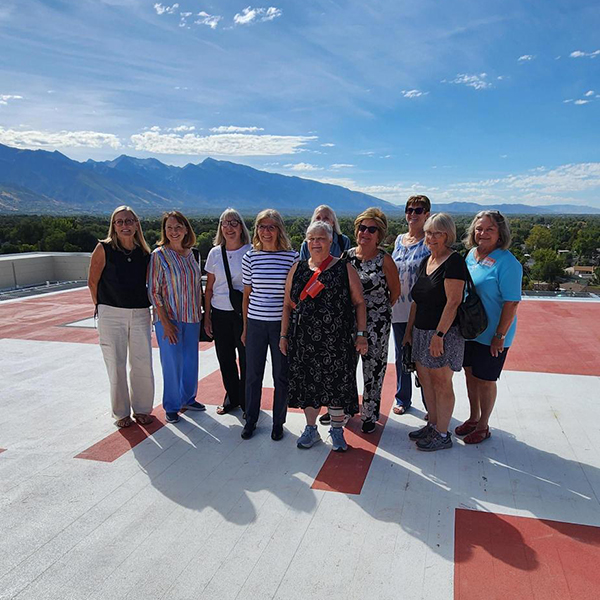
Westminster alumni–joined by Westminster professors and local hosts from IPSL Global Engagement–embarked on a Westminster Alumni Travel trip to Cape Town, South Africa earlier this year. This is the third Westminster Alumni Travel trip following a journey to Peru in October 2025. We asked alumna and participant Tanya Blakemore (MBA '07) to share her experiences.
I didn’t expect Cape Town, South Africa, to change me. I expected to learn, to observe, to travel. What I didn’t expect was to return home fundamentally different.
As I reflect on my visit, I realize just how far my expectations fell short of my lived experience—and how deeply this journey reshaped me, both personally and professionally.
As an MBA graduate, I was immediately intrigued by the health sciences alumni trip itinerary, even though my studies and applied work are rooted more in the business world. South Africa had long been on my bucket list, but I also knew it was not a place I could—or should—navigate casually. This thoughtfully curated program made the experience both accessible and intentional. Our days included meetings with healthcare providers and cultural and spiritual leaders, visits to historically significant sites, breathtaking views of natural beauty, wine tastings, and deeply human conversations with advocates working in HIV care, housing insecurity, and social services. For a seasoned world traveler, the decision to join was an easy one.
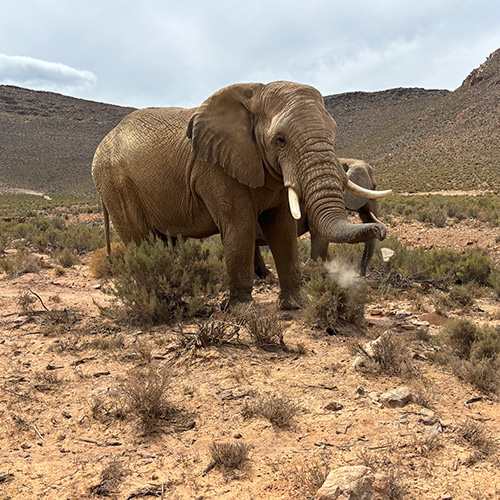
I arrived before the alumni group and stayed longer, knowing the journey itself was long and wanting to absorb as much as possible while I was there. Before the formal program began, I embarked on a Big Five safari. Seeing wildlife up close in their natural habitat was surreal. I felt as though I was already floating on cloud nine and wondered how the experience could possibly get any better.
It did—far beyond what I could have imagined.
What followed was not simply educational or eye-opening; it was soul-changing. Throughout the trip, we encountered stark contrasts—from extreme poverty to world-renowned tourist destinations—and listened to firsthand accounts from providers and advocates who dedicate their lives to serving their communities. Their shared mission was unwavering: to uphold respect, equality, and dignity for all.
South Africa’s history of apartheid—officially ending in the early 1990s—was addressed openly and honestly. Yes, forced removals of Black, Coloured, and Indian populations occurred. Yes, these injustices were sanctioned by the government of the time. And no, the outcomes were not what was promised or intended. What stood out most was not the pain of the past, but the resilience of the people and their determination to rise, resist, and rebuild.
Living in the United States, I found myself reflecting on what we could learn from South Africa. The people openly acknowledge that injustice occurred and that inequities persist. Yet, there is a sense of forward momentum and coexistence that sharply contrasts with how the country is often portrayed in U.S. media. What I experienced was not chaos or unrest, but a society grounded in acceptance, perseverance, and quiet strength.
As a group—and at times individually—we visited the townships of Langa, Khayelitsha, and Manenberg. We spoke directly with residents about their lives and how apartheid shaped their realities. We shared braais—grill gatherings where food matters, but community matters more. Conversations lingered long after the plates were cleared, and generosity flowed freely.
I walked through Langa with a local guide, stopping to speak with shop owners and homeowners along the way. Business owners proudly shared their limited food, demonstrating a mastery of flavor—the boiled peanuts were the best I’ve ever had. One resident eagerly invited me into their immaculate ten-foot shipping-container home, beaming with pride over their few possessions and, most importantly, the security of a roof over their family’s heads.
I also toured government apartment housing, where a family of six shared a single studio space with room for little more than one bed, a refrigerator, a microwave, and a bookshelf. In these housing complexes and nearby shack communities, bathroom facilities are communal. In some cases, up to ten families share a single portable toilet, cleaned by the government only once a week. To preserve dignity and sanitation, residents work together to create shared cleaning schedules—collectively taking responsibility for one another.
At first, I felt deep sadness witnessing these conditions. But after listening to residents and observing their gratitude and joy, that sadness shifted. The people I met possessed dignity not because of what they owned, but because of what they contributed. They practiced sustainability, grew their own food, bartered within their communities, and—most importantly—lived with purpose, pride, and self-respect.
In many ways, South Africa is not so different from the United States. Both nations grapple with inequality and imperfect systems of governance. The difference I observed is this: South Africa has chosen to confront its past and continue moving forward.
Toward the end of the trip, some of us cage-dived with sharks. I visited Cape Point and Cape Agulhas, traveling as far south as possible to fully absorb the vastness of the continent. As we explored beyond Cape Town, I felt an unexpected sense of belonging—like a return home to what many call Mother Africa. I know with certainty this will not be my last visit.
This alumni trip made me a better human being. Upon returning home, I was struck by how quickly conversations shifted back to gossip, missed business opportunities, and surface-level concerns. Few wanted to hear about the depth of what I had experienced. Still, I found peace in knowing I had reconnected with my inner self and rediscovered the values I strive to live by. That clarity continues to guide me toward deeper reflection, growth, and more meaningful engagement with the world.
Ultimately, I know I can be a better citizen—and a better human—because of my first visit to South Africa.
Until we meet again, Mother Africa—thank you.
–Tanya Blakemore (MBA '07)
Join Westminster on the next chapter of Westminster Alumni Travel with an unforgettable trip to Hanoi, Vietnam in October 2026.