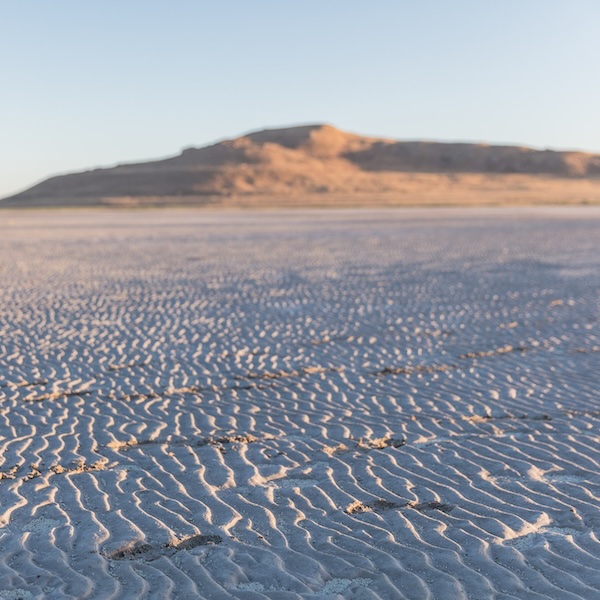
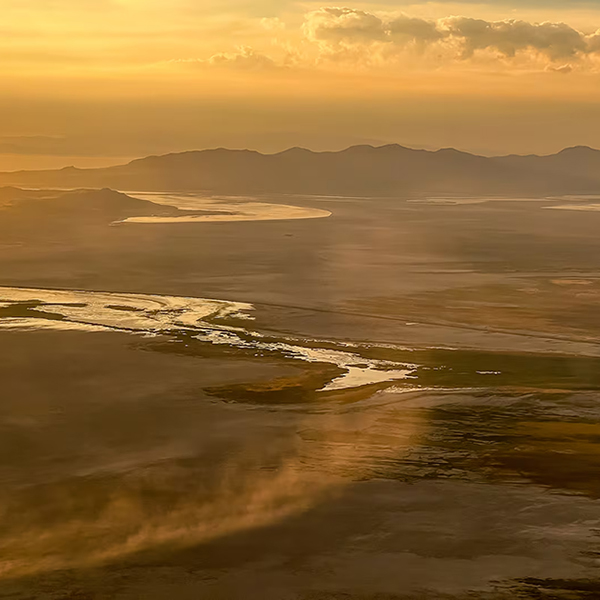
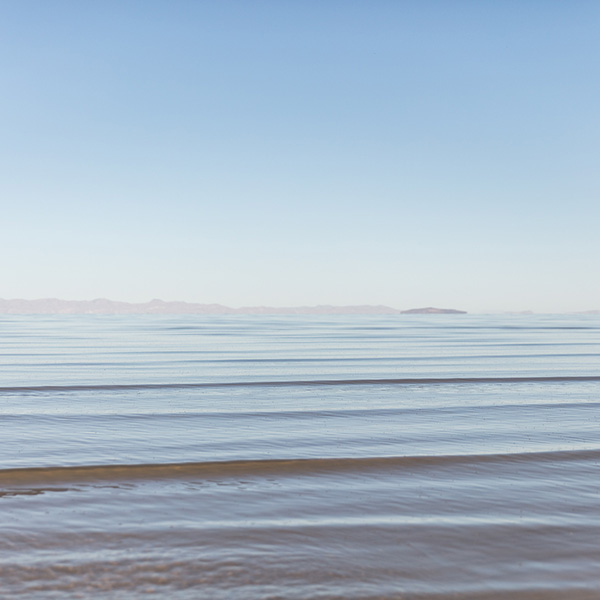
Professor Bonnie Baxter is an internationally renowned expert at the forefront of research on Great Salt Lake, and was recently featured in an award-winning documentary, “The Lake”. As a microbiologist with three decades of experience and the director of Westminster University’s Great Salt Lake Institute, Dr. Baxter’s research came to a head when, in 2023, she made international headlines after jointly publishing a dire report about the state of the lake–and the ecological collapse that could happen in five years if it continued its precipitous decline in water levels. Now, she’s taken this message to a new venue: The Sundance Film Festival.
In 2022, Great Salt Lake hit a historic low in elevation, and Dr. Baxter was featured in many media interviews sharing her expertise. Around this time, film director Abby Ellis approached Dr. Baxter and asked her to participate in a documentary about Great Salt Lake called “The Lake” which premiered this January at the Sundance Film Festival in the U.S. Documentary Competition category. The film was shown in five sold-out in-person screenings and won the U.S. Documentary Special Jury Award for Impact for Change.
“This environmental-crisis story is a probing and provocative look at the interdependency of science and faith, and the power of individuals and communities to avert disaster by working together. We were moved and encouraged by its vision of people working across political divides,” cited the jury.
Along with Dr. Baxter, “The Lake” features ecologist and activist Dr. Ben Abbott and Great Salt Lake Commissioner Brian Steed. The film follows the three experts as they navigate the natural, social, and political obstacles involved in preserving the lake–and the health and livelihoods of Utahns.
“When it comes to our environment, it always affects everybody. In this process, it had to be about people convincing other stakeholders—whether it’s agriculture, government, development—that their lives are going to be impacted by this as well. By the end of the film, we start to see them turn the corner and convince people of that, which is something I hope we can do everywhere else in the country,” said director Abby Ellis in an interview with The International Documentary Association (IDA).
Dr. Baxter emphasized that although the film focused on her, Dr. Abbott, and Steed, there are many people committed to protecting Great Salt Lake.
“It’s not three people doing this work. There are so many people–scientists, artists, and others–working just as hard as the three of us on saving Great Salt Lake,” said Dr. Baxter.
This collaboration and hard work has led to real change. Utah Gov. Spencer Cox recently vowed to preserve Great Salt Lake by 2034, when the state will host the Winter Olympic Games. Significant funding has been raised to obtain dust monitors that will measure the dust blowing from Great Salt Lake’s exposed lakebeds. At Westminster University, the work continues through Great Salt Lake Institute (GSLI).
GSLI was launched in 2008 to bring science education to thousands of people in Utah and beyond. The Institute regularly partners with local organizations like Friends of Great Salt Lake, Tracy Aviary, Great Salt Lake Audubon, and state agencies involved in lake management, and employs Westminster student researchers to conduct research on Great Salt Lake. This summer, GSLI professor Dr. David Parrott, along with Westminster student researchers, will study the biological impacts of dust from Great Salt Lake on human health.
Dr. Baxter said that while Great Salt Lake’s situation is dire, there is still time to act and make a difference.
“I really hope that people take that away. We’re really close to the edge, but we can still save it. And that’s the message that I want people to take [from this film].”
 From left to right: Dr. Ben Abbott (ecologist and activist), Dr. Bonnie Baxter (microbiologist,
Westminster University professor, and director of GSLI), Fletcher Keyes (producer),
Abby Ellis (director), and Brian Steed (Great Salt Lake Commissioner). Photo courtesy
of Sundance Institute.
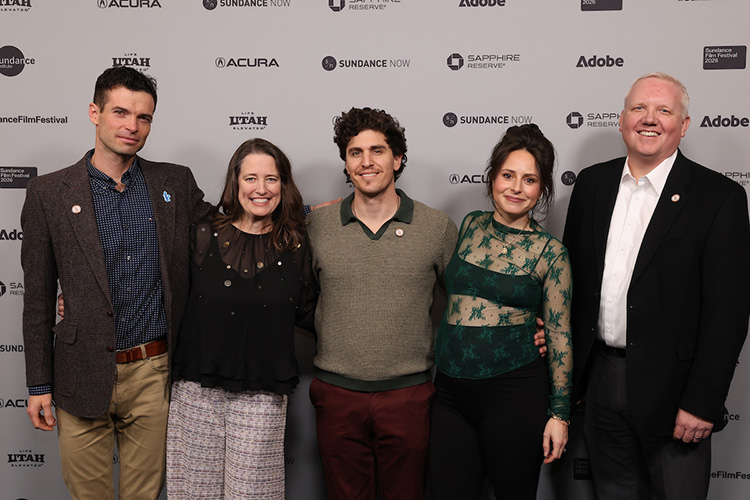
From left to right: Dr. Ben Abbott (ecologist and activist), Dr. Bonnie Baxter (microbiologist,
Westminster University professor, and director of GSLI), Fletcher Keyes (producer),
Abby Ellis (director), and Brian Steed (Great Salt Lake Commissioner). Photo courtesy
of Sundance Institute.